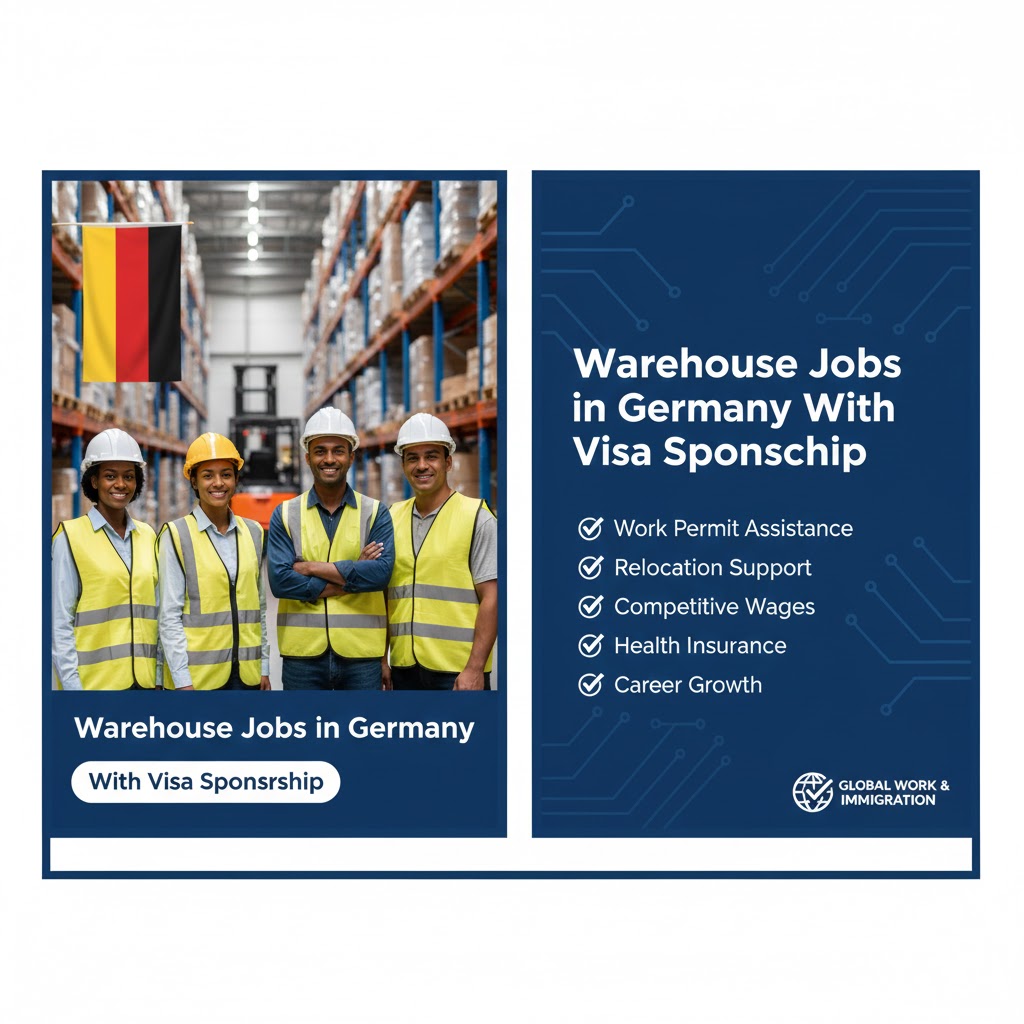
Understanding the Key: The German Work Visa Process
The employer in Germany must act as your sponsor. The main work visa routes for warehouse jobs are:
The Skilled Worker Visa (Fachkräfteeinwanderungsgesetz): This is the most common path. If you have a recognized vocational training qualification (e.g., as a Fachlagerist – specialist in warehouse logistics) of at least 2 years, you can get a visa for a job matching that qualification.
The EU Blue Card: For university graduates. Less common for warehouse roles unless in a supervisory/planning position.
The Opportunity Card (Chancenkarte): A new points-based system starting June 2024. This allows you to come to Germany for up to a year to search for a job. You need to meet point requirements based on qualifications, language skills, experience, etc. This is a fantastic new option for those without a prior job contract.
The IT Specialist Visa: Not applicable for standard warehouse jobs.
Crucial Requirement for All: Your vocational qualification or degree must be officially recognized in Germany by the relevant authority (like the IHK – Chamber of Industry and Commerce). This process (Anerkennung) can take time and should be started early.
What Employers Are Looking For
Technical Skills: Experience with warehouse management systems (SAP, WMS), forklift licenses (Staplerführerschein), pick-by-voice/light systems, packing machines.
Language: German is a major advantage. Even A2/B1 level can make you stand out. English may be sufficient in large international logistics hubs or companies.
Soft Skills: Reliability, punctuality, physical stamina, ability to work in shifts (early/late/night), and teamwork.
EU Recognized Qualifications: A formal apprenticeship/certificate in logistics is highly valued.
Top Regions & Hubs for Warehouse Jobs
The “Logistics Triangle” (Dreiländereck): The area around Leipzig, Halle, and Magdeburg is Germany’s logistics heartland, with massive distribution centers for Amazon, DHL, BMW, and more.
Ruhr Area & North Rhine-Westphalia: Major hubs in Dortmund, Duisburg (world’s largest inland port), Cologne, and Düsseldorf.
Frankfurt/Rhein-Main Area: Central for air freight (Frankfurt Airport) and road networks.
Berlin/Brandenburg: Growing e-commerce and distribution sector.
Bavaria: Around Munich and Nuremberg for industrial and automotive logistics.
Companies Known to Sponsor Visas (A Starting Point)
These large, international companies have the resources and experience with the sponsorship process:
Logistics Giants: DHL Supply Chain, DB Schenker, Kühne + Nagel, Rhenus Logistics, Hellmann Worldwide Logistics.
E-commerce & Retail: Amazon (one of the largest employers), Zalando, Otto.
Automotive & Industry: BMW, Volkswagen, BASF (all have huge logistics operations).
Agencies & Staffing Firms: Specialized agencies often recruit internationally for German clients.
Adecco Germany, Randstad Germany, Persona Service, Zeitarbeit (temporary work) firms.
How & Where to Apply
Job Portals (Use German keywords):
MakeItInGermany.de: The official job portal of the German Federal Government. Filter for “Logistics” jobs.
StepStone.de & Indeed.de: Major German job boards.
LinkedIn: Set your location to a German city and use keywords like “Lagerhelfer (m/w/d) mit Visa-Sponsoring”, “Fachkraft Lagerlogistik”, “Kommissionierer”.
Company Career Pages: Always check the “Careers” section of the companies listed above.
Keywords for Your Search:
Lagerhelfer / Lagerarbeiter (Warehouse Assistant/Worker)
Fachlagerist / Fachkraft Lagerlogistik (Specialist in Warehouse Logistics)
Kommissionierer (Order Picker)
Staplerfahrer (Forklift Driver)
Logistikmitarbeiter (Logistics Employee)
…mit Visa-Support / Unterstützung bei der Visumsbeantragung (…with visa support)
Step-by-Step Action Plan for 2026
Get Your Documents Ready: Prepare your CV (in German format – Lebenslauf with photo), vocational certificates, and work references. Translate them professionally.
Start the Recognition Process (Anerkennung): Contact the Zentralstelle für ausländisches Bildungswesen (ZAB) or the relevant IHK for your qualification recognition. This is your most important step.
Learn German: Start learning immediately. Aim for at least level A2 to increase your chances significantly.
Apply Strategically: Tailor your CV and cover letter (Anschreiben) for each application, highlighting your skills and willingness to relocate.
Secure the Job Contract: This is your ticket. The contract must meet German salary and condition standards.
Apply for the Visa: With the job contract and recognition notice, apply at the German Embassy/Consulate in your home country.
Move & Register: After getting the visa, move to Germany, register your address (Anmeldung), and apply for your residence permit.
Important Realities
Competition: There is competition from EU citizens who don’t need sponsorship. Your edge is your specific skill, qualification, or language combination.
Temporary Work: You might initially find a contract through a Zeitarbeitsfirma (staffing agency). This is a common and legitimate way to enter the German job market and can lead to a permanent position.
Patience & Persistence: The process is bureaucratic and can be slow. Being organized and persistent is key.
Start now. Focusing on qualification recognition and basic German will put you miles ahead in your search for a warehouse job in Germany with visa sponsorship. Viel Erfolg (Good luck)